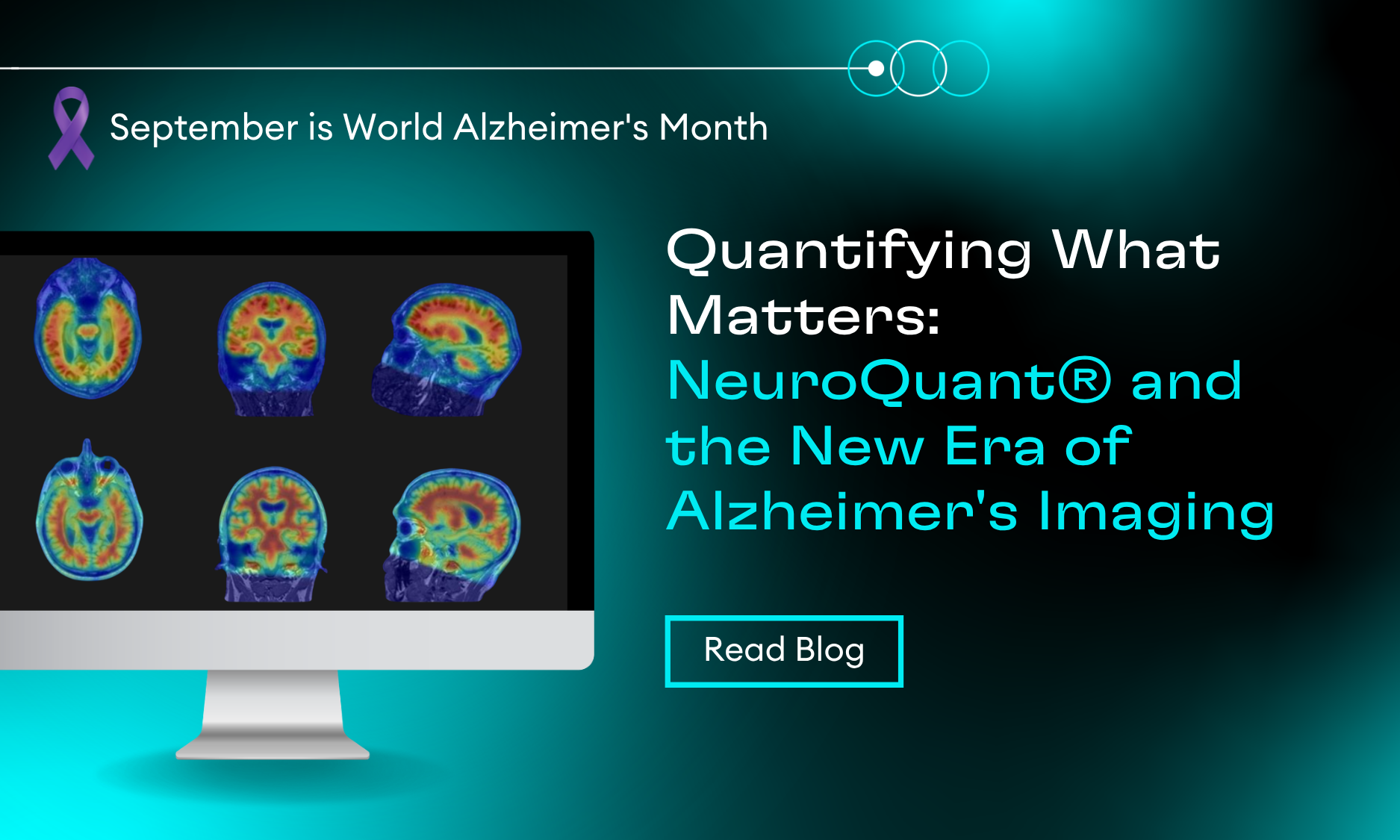
Cortechs.ai’ abstract titled “Determining Brain Age Using Machine Learning Combined With Automated Brain Segmentation and PET imaging In Normal, Alzheimer’s Disease and Mild Cognitive Impairment Subjects” was accepted by ACTRIMS
Lead author and Cortechs.ai Principal Scientist, Weidong Luo, presented our findings at the 2020 ACTRIMS meeting on Friday, February 28th.
Findings
| BACKGROUND | |||
| Accurate and early diagnosis of Multiple Sclerosis (MS) is critical for patients to start treatments. In MS patients, there is a high correlation between various atrophy and physical and cognitive impairments. With the recent advances in image processing and machine learning methods, a better identification of MS patients using magnetic resonance imaging (MRI) became achievable. | |||
| OBJECTIVE | |||
| To evaluate the performance of machine learning models for identifying MS subjects and to study feature importance selected by models. | |||
| METHODS | |||
| 463 MS (102m/361f, age:18-71yo) and 2315 normal subjects’ data (1080m/1235f, age:18-71yo) were used in this study. T1-weighted MRI scans were processed by NeuroQuant 3.0 (Cortechs.ai Inc, San Diego, USA) to generate brain volumetric information (including the volume of cerebral white matter (WM) hypo-intensities). Random Forests algorithm was used for creating machine learning models. Brain structure volume normalized by Intracranial Volume (ICV) were used as the input. One-third randomly selected data were used for testing while rest for training. The performance of the models and the importance of the features based on the whole age range data and specific age range data were evaluated. | |||
| RESULTS | |||
| For model one (all data), model area under the curve (AUC) is 0.95 and the precision is 93% and 98%; sensitivity is 100% and 63% for normal and MS subjects respectively. Top five features are cerebral WM Hypo- intensities, Thalamus and Cerebellar WM, Age and Isthmus Cingulate. For model two (age < 40 years), the model AUC is 0.94 and the precision is 92% and 92% for normal and MS subjects while sensitivity is 98% and 76% for normal and MS subjects respectively. Top three features are the same as the model one. Next two features are cerebral WM and posterior Superior Temporal Sulcus. For model three (age >= 40 years), the AUC is 0.94 and the precision is 94% and 96%, sensitivity is 100% and 57% for normal and MS subjects respectively. Top five features Thalamus, Age, Cerebellar WM, Cerebral WM Hypo-intensities, Isthmus Cingulate. | |||
| CONCLUSION | |||
| Machine learning models showed high classification performance between normal and MS. Furthermore, models constructed with data from different age ranges selected different key features thus enabled different precision and sensitivity performance for MS classification. This also suggests evolving effects of disease upon brain during progression. These models might be used as MS classifiers to assist clinicians in decision making. |