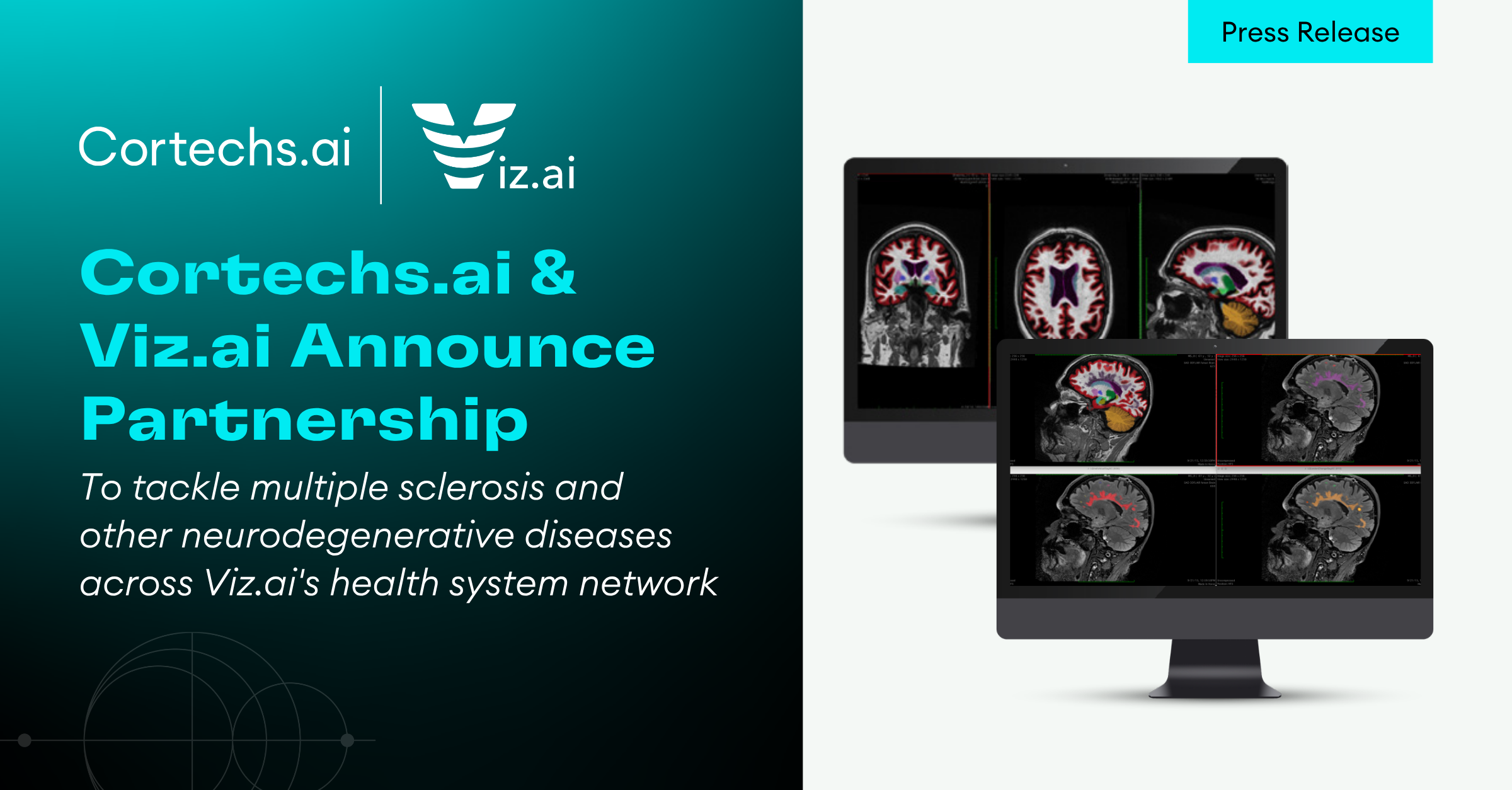
Quantitative MRI has become an essential component of modern neuroimaging, providing objective, reproducible measurements that support clinical confidence, normative comparisons, and longitudinal disease monitoring. Tools that translate MRI data into quantitative metrics have helped move radiology beyond purely qualitative interpretation.
At the same time, MRI acquisition itself is evolving. Deep learning–based reconstruction and denoising techniques are now widely adopted, enabling faster scans, improved image clarity, and more consistent image quality across patients. Together, these advancements are reshaping how MRI data is acquired, processed, and ultimately interpreted.
Rather than disrupting quantitative imaging, deep learning (DL) reconstruction strengthens it when deployed thoughtfully and validated appropriately.
The Natural Evolution of MRI Reconstruction
Deep learning reconstruction represents a natural step forward in MRI technology. Unlike traditional reconstruction techniques, DL algorithms learn complex relationships within MRI data to suppress noise, preserve anatomical detail, and compensate for accelerated acquisitions.
Clinically, this evolution delivers clear benefits:
- Shorter scan times, improving patient comfort and compliance
- Cleaner images with reduced noise and fewer artifacts
- Improved consistency in accelerated imaging protocols
For quantitative MRI, these advantages translate into high‑quality input images that support reliable automated segmentation and analysis.
Validation Approach: How Deep Learning Was Evaluated
To ensure that deep learning reconstruction can be used safely in quantitative workflows, a structured validation strategy was applied across diverse imaging scenarios. This included several 3rd party and OEM-specific DL algorithms.
Key elements of the validation methodology included:
- Same‑subject comparisons using identical anatomy to isolate reconstruction effects
- Evaluation across multiple scanners, field strengths, and acquisition strategies
- Comparison of standard reconstructions, accelerated acquisitions, and accelerated plus DL reconstructions
- Focus on clinically meaningful regions of interest, including hippocampal and ventricular structures
- Quantitative assessment using percent change, absolute volume difference, and predefined acceptance thresholds
- Evaluation of variability using mean percent change per DL method and assignment of pass/fail based on acceptance thresholds
This approach mirrors real‑world clinical use and emphasizes longitudinal consistency rather than theoretical perfection.
What the Results Show
Across validation datasets, volumetric outputs derived from DL‑reconstructed images demonstrated strong alignment with standard sequence iterations.
Key observations include:
- Hippocampal volumes consistently remained within accepted clinical variability ranges
- Mean volumetric differences were small and systematic rather than erratic
- Acceptance rates for core neuroanatomical structures were high across field strengths
- Accelerated imaging combined with DL reconstruction maintained quantitative stability while enabling faster exams
Where variability was observed, it followed known anatomical patterns, most notably in CSF‑adjacent ventricular regions, which have historically been sensitive to changes in resolution and reconstruction. Importantly, this behavior was predictable and clinically manageable.
Overall, the results demonstrate that DL reconstruction preserves the anatomical information required for reliable quantitative analysis.
Acceleration and DL: Enabling Faster Scans with Confidence
One of the most powerful advantages of DL reconstruction is its ability to support accelerated imaging. By compensating for reduced acquisition time, DL enables faster exams without sacrificing image quality or quantitative reliability.
When acceleration and DL reconstruction are evaluated together as part of a unified protocol, quantitative measurements remain consistent while scan efficiency improves. This allows clinical teams to balance throughput, patient experience, and data integrity without compromise.
A Practical Approach to Responsible Adoption
Adopting deep learning reconstruction does not require abandoning established quantitative workflows. Instead, it calls for a modern validation mindset:
- Anchor new protocols to a known clinical baseline
- Perform same‑subject comparisons to isolate reconstruction effects
- Focus on clinically meaningful regions of interest
- Evaluate stability of volumetric measurements
Once validated, DL reconstruction becomes a standardized and trusted component of the imaging protocol- just like field strength, resolution, or sequence selection.
The Clinical Impact: Better Imaging, Same Confidence
When implemented thoughtfully, deep learning reconstruction delivers meaningful clinical benefits:
- Faster exams with improved patient tolerance
- Cleaner, more consistent images across populations
- Reliable quantitative measurements that support longitudinal care
For clinicians, this means confidence that observed changes reflect patient biology, not technology shifts.
Looking Forward
Deep learning reconstruction is not a temporary trend- it is a foundational advancement in MRI. When paired with quantitative imaging tools and validated with care, it enhances workflow while preserving image quality standards.
The future of MRI is faster, cleaner, and more consistent. Deep learning reconstruction helps make that future achievable without compromising the quantitative insights clinicians rely on every day.