The American Society of Neuroradiology (ASNR) 2026 brought together neuroradiologists, imaging leaders, researchers, and industry partners in Austin for a week focused on how the field continues to innovate, scale, and lead across neurological care. The meeting held May 17–20, 2026, highlighted the expanding role of advanced imaging, artificial intelligence, and quantitative tools in helping clinicians move from image interpretation alone toward more standardized, data-driven decision support.
For Cortechs.ai, ASNR was an important opportunity to connect with clinicians and imaging leaders around a central theme: quantitative imaging is becoming increasingly important across the full neurology care pathway. From Alzheimer’s disease and ARIA monitoring to brain tumors, multiple sclerosis, and PET biomarker analysis, the NeuroQuant® portfolio reflects the growing need for objective, reproducible insights that can support confident clinical decision-making.
Quantitative Imaging in Alzheimer’s Disease Care
One of the major themes at ASNR 2026 was the continued evolution of Alzheimer’s disease diagnosis, staging, treatment selection, and safety monitoring.
During the “Therapeutic Impact in Alzheimer’s Disease” panel, Dr. Nathan White, CTO of Cortechs.ai, joined a timely discussion on the growing role of quantitative imaging across the Alzheimer’s disease care pathway. The session explored how advanced imaging tools may help support more informed clinical decisions as disease-modifying therapies continue to shape real-world care. He also discussed the importance of quantitative PET in delivering objective biomarker analysis and supporting therapy-related decisions.
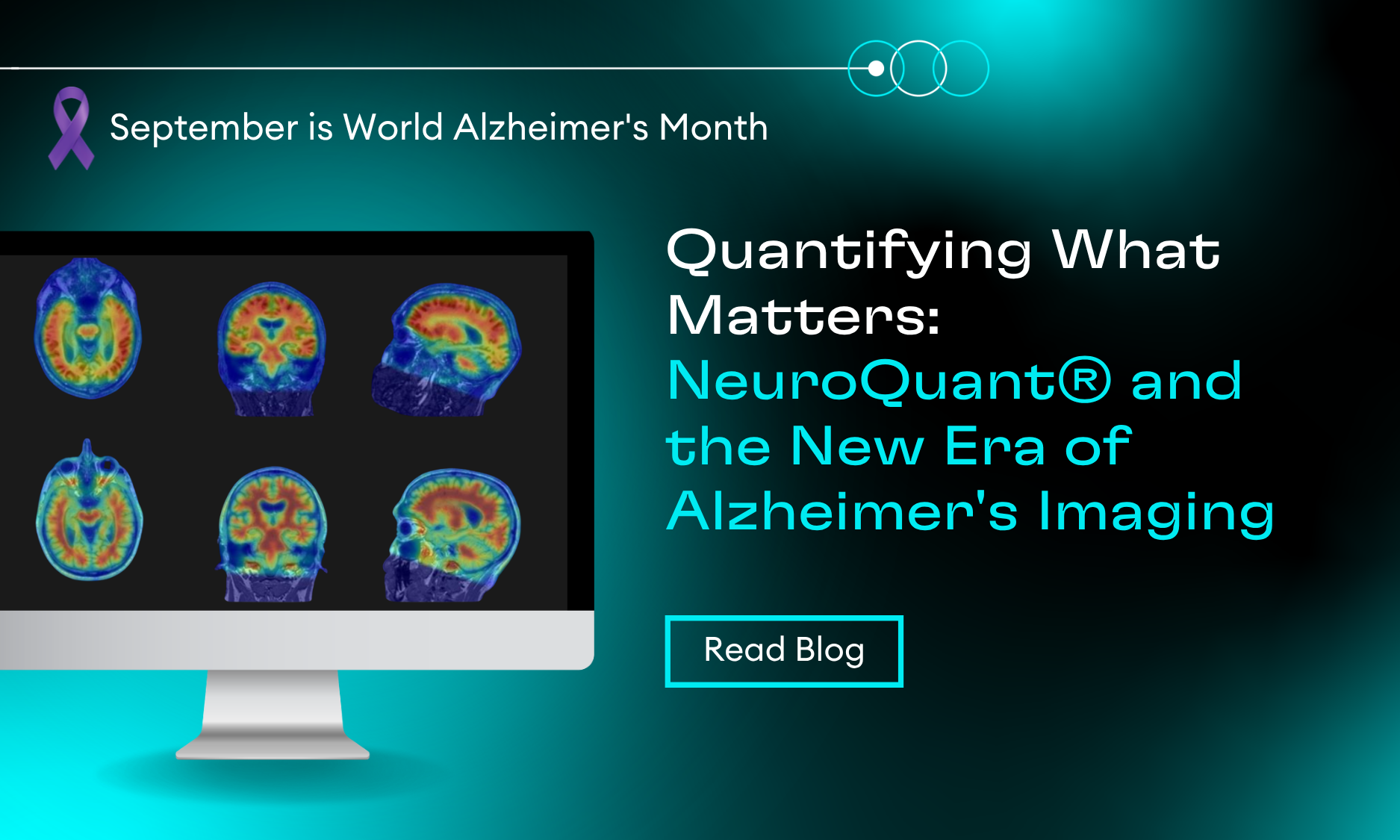
This discussion closely aligns with the broader NeuroQuant portfolio, including NeuroQuant, NeuroQuant Lesion Surveillance, and NeuroQuant PET. Together, these tools are designed to help clinicians visualize complex neurological information more efficiently, reduce subjectivity, and support standardized interpretation across the Alzheimer’s disease care journey.
NeuroQuant PET and the Future of Dementia Imaging
Cortechs.ai also hosted an ASNR 2026 Innovation Theater session, “NeuroQuant PET: Advancing Dementia Imaging Through Quantitative PET Analysis and Automated Centiloid Quantification,” featuring Dr. Ana M. Franceschi, MD, PhD.
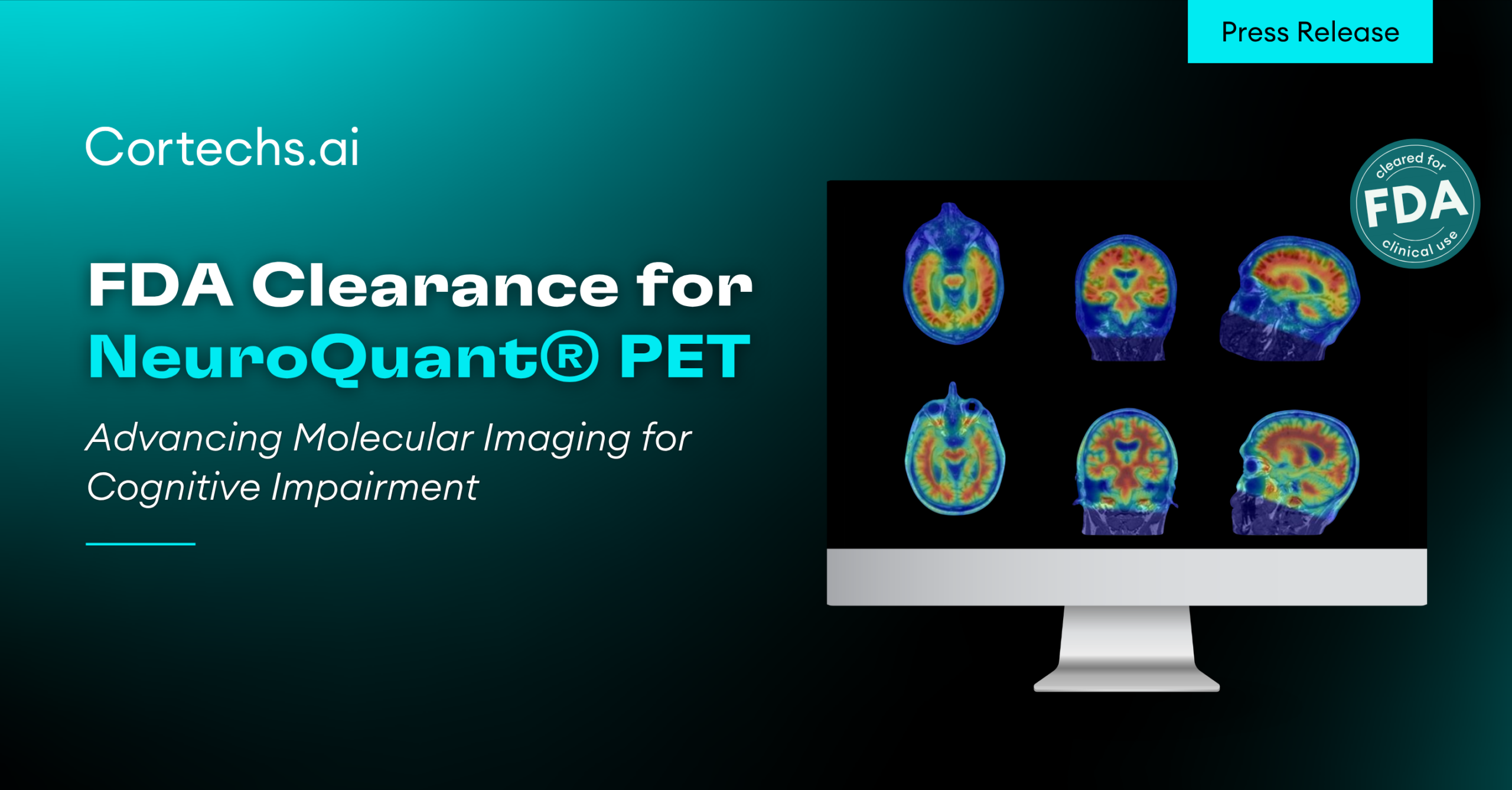
The session focused on how NeuroQuant PET, an FDA-pending solution, supports more standardized and reproducible dementia imaging through automated quantification of amyloid, tau, and FDG PET studies. Through clinical case examples, Dr. Franceschi explored the role of quantitative biomarkers and automated Centiloid measurements in supporting interpretation and disease monitoring.
As PET imaging becomes more central to Alzheimer’s disease evaluation and treatment pathways, quantitative tools are increasingly important for helping clinicians move beyond visual assessment alone. NeuroQuant PET is designed to provide objective outputs that can support biomarker interpretation and more consistent communication across multidisciplinary care teams.
Supporting anti-amyloid therapy Safety Monitoring
ARIA monitoring remains a critical part of Alzheimer’s treatment pathways, particularly as anti-amyloid therapies become more widely integrated into clinical practice.
NeuroQuant Lesion Surveillance reflects Cortechs.ai’s focus on helping clinicians assess and monitor imaging findings with greater consistency. By supporting quantitative and longitudinal review, lesion surveillance tools may help care teams identify relevant changes over time and better manage the imaging demands associated with therapy safety monitoring.
At ASNR, conversations around Alzheimer’s disease reinforced that ARIA monitoring is not an isolated workflow. It is part of a broader imaging ecosystem that includes baseline assessment, follow-up MRI, therapy eligibility evaluation, longitudinal safety review, and multidisciplinary communication.
Advancing Precision Workflows Across Neurology
During the Philips Healthcare Breakfast & Clinical Update, Dr. Suzie Bash shared perspectives on how AI-powered precision medicine and intelligent workflows are reshaping the future of imaging.
The discussion emphasized that radiology is increasingly positioned as a data-driven contributor across the patient care journey, not simply a point of image interpretation. Quantitative imaging technologies can support this shift by enabling automated analysis, standardized reporting, and objective insights across neurological conditions.
Demonstrations from the NeuroQuant suite showcased how quantitative outputs can help clinicians visualize complex information more efficiently and support informed decision-making across neurological care pathways.
From Images to Actionable Insights
A key takeaway from ASNR 2026 was that the future of neuroradiology will increasingly depend on tools that can transform imaging data into clinically meaningful information.
Across Alzheimer’s disease, MS, brain tumors, and many more disease states, clinicians are being asked to integrate more data, monitor patients longitudinally, and communicate results clearly across care teams. Quantitative imaging can help meet this challenge by providing objective measurements, standardized outputs, and visualizations that support more informed decision-making.
For Cortechs.ai, ASNR 2026 reinforced the importance of building tools that fit into real clinical workflows while supporting the evolving needs of neuroradiologists, neurologists, nuclear medicine physicians, and multidisciplinary care teams.
Looking Ahead
We are grateful to everyone who joined our sessions, visited with our team, and contributed to the conversations at ASNR 2026.
As neurological imaging continues to evolve, Cortechs.ai remains focused on advancing quantitative tools that support more standardized, reproducible, and clinically meaningful imaging workflows across the neurology care pathway.
Learn more about the NeuroQuant portfolio and how quantitative imaging is supporting the future of neurological care.