This week, Cortechs.ai was proud to exhibit at the Society of Nuclear Medicine and Molecular Imaging Annual Meeting in Los Angeles, joining leaders across nuclear medicine, molecular imaging, radiology, neurology, research, and industry to discuss the innovations shaping the future of patient care.
SNMMI has long served as one of the most important forums for the molecular imaging community. This year’s meeting highlighted a clear and accelerating trend: PET imaging is moving deeper into routine clinical decision-making, particularly in neurodegenerative disease. As Alzheimer’s disease and related dementias increasingly rely on biomarker-driven evaluation, the need for standardized, reproducible, and workflow-compatible PET quantification has never been more important.
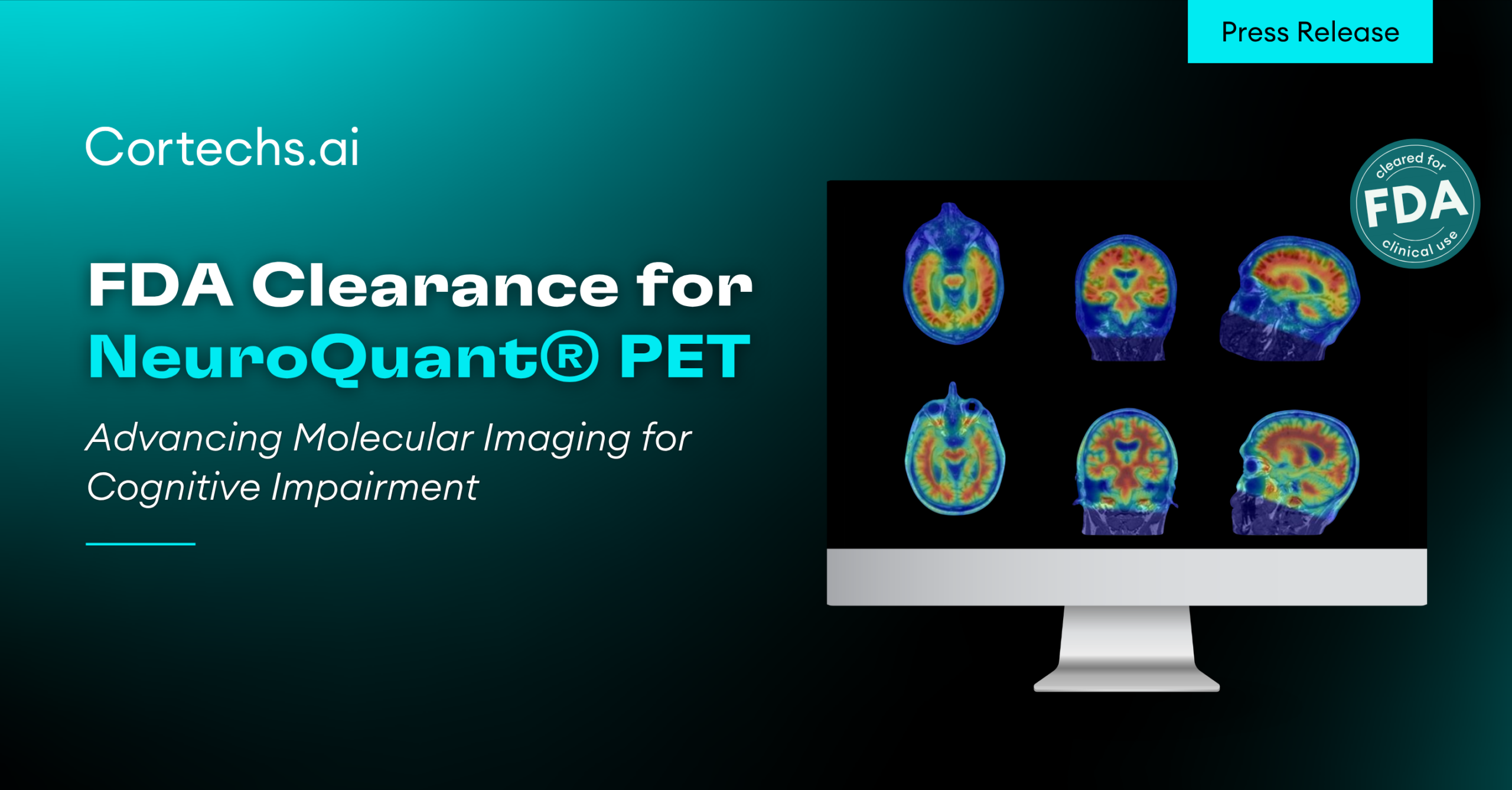
For Cortechs.ai, SNMMI was an opportunity to showcase NeuroQuant® PET, our FDA 510(k)-pending solution designed to bring automated PET quantification and structured reporting into dementia imaging workflows.
Bringing Objectivity to Molecular Dementia Imaging
Visual interpretation remains central to PET imaging, but as clinical pathways evolve, quantitative tools can provide additional clarity, consistency, and longitudinal value. NeuroQuant PET is designed to support physicians by generating objective, regional PET metrics that can complement expert interpretation and help standardize reporting across sites, scanners, tracers, and care settings.
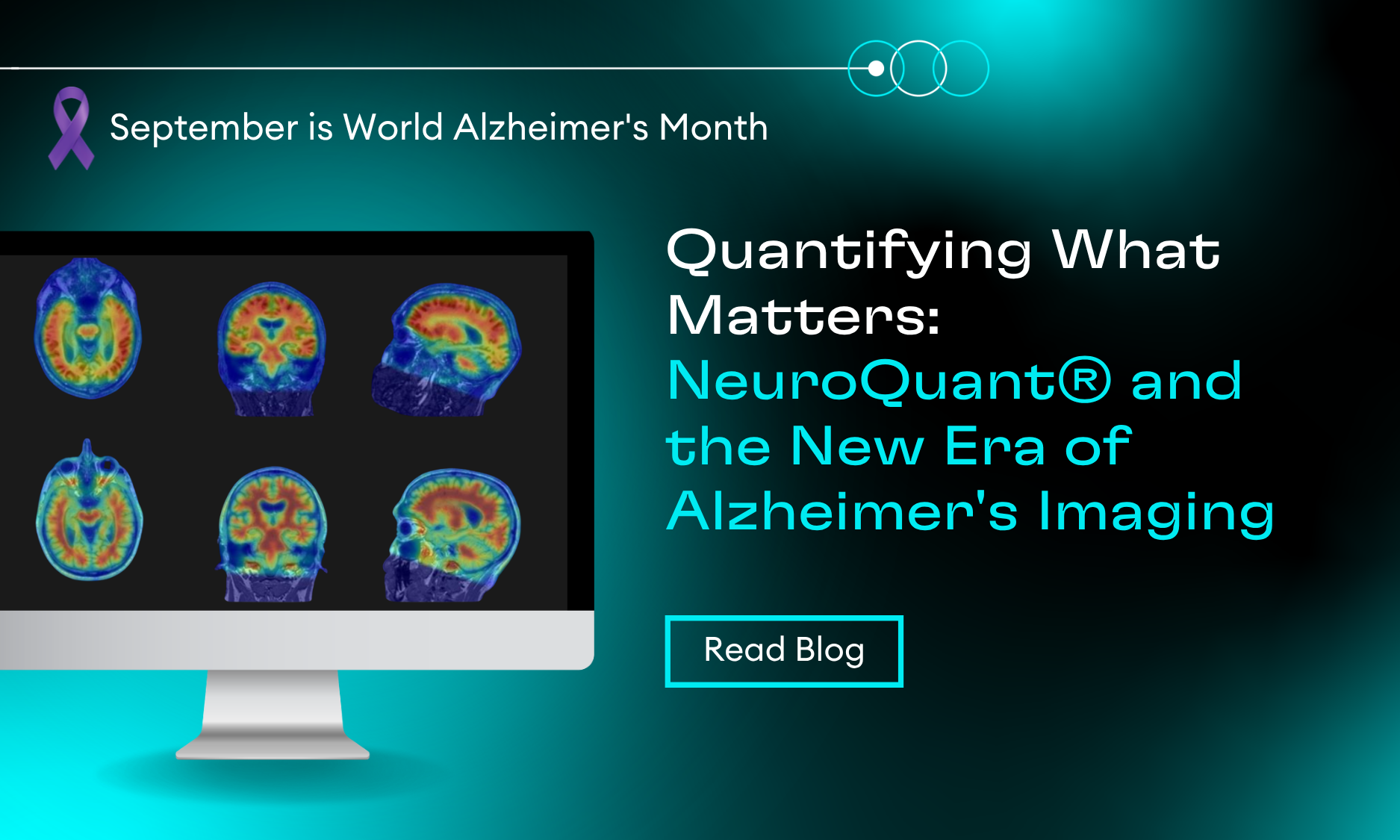
The platform is being developed to provide automated analysis for amyloid, tau, and FDG PET imaging, including standardized uptake value ratios, regional Z-scores, and structured outputs that can support consistent, data-driven review. For amyloid imaging, NeuroQuant PET also includes Centiloid scoring, a standardized framework that helps translate amyloid burden into a common quantitative scale across tracers and imaging platforms.
This capability is particularly important as dementia care becomes increasingly tied to imaging biomarkers. Clinicians, imaging centers, and health systems need tools that do more than generate numbers. They need outputs that fit into real-world clinical workflows, return results where physicians already work, and support confident, efficient interpretation.
Designed for Clinical Workflow
A central theme in conversations at SNMMI was implementation. Innovation only matters if it can be adopted by clinical teams without adding unnecessary complexity.
NeuroQuant PET is designed with that reality in mind. The platform supports PET-only, PET/CT, and PET/MR workflows and is intended to generate PACS-compatible outputs, including tracer-specific reports and image overlays that can be reviewed within existing radiology and nuclear medicine workflows.
When MRI is available, NeuroQuant PET can also integrate structural information from NeuroQuant’s established brain segmentation and volumetric analysis platform, helping connect molecular findings with anatomic context. This ability to bring together molecular and structural imaging may become increasingly valuable as clinicians evaluate neurodegenerative disease from multiple complementary perspectives.
Why SNMMI Matters for NeuroQuant PET
The SNMMI Annual Meeting brings together the exact community helping define the future of molecular imaging: nuclear medicine physicians, radiologists, technologists, researchers, industry partners, and clinical innovators. Exhibiting at SNMMI gave Cortechs.ai the opportunity to engage directly with the people advancing PET imaging from both the scientific and clinical sides.
Those conversations reinforced a shared need across the field: as PET imaging expands, quantitative tools must be reliable, reproducible, clinically meaningful, and easy to incorporate into daily practice.
For dementia imaging, that means supporting amyloid, tau, and FDG interpretation with clear regional metrics, standardized reports, and outputs that can help reduce variability while preserving physician expertise. NeuroQuant PET is being developed to meet that need.
Building on the NeuroQuant Legacy
Cortechs.ai has a long history of advancing quantitative neuroimaging. NeuroQuant has helped bring automated brain segmentation and volumetric analysis into clinical practice, supporting physicians with objective measurements across neurologic conditions.
NeuroQuant PET represents the next step in that evolution: extending quantitative insight from structural MRI into molecular imaging.
As biomarker-based dementia care continues to grow, PET quantification has the potential to play an increasingly important role in diagnosis, treatment planning, therapy monitoring, and longitudinal assessment. Cortechs.ai is committed to supporting that future with tools that are scientifically grounded, clinically practical, and designed around the needs of imaging professionals.
Looking Ahead
We left SNMMI energized by the momentum in nuclear medicine and molecular imaging, and grateful for the opportunity to connect with clinicians, researchers, and partners who share our commitment to advancing precision care.
NeuroQuant PET is currently FDA 510(k)-pending for PET quantification and analysis in patients undergoing evaluation for dementia. We look forward to continuing the conversation with the molecular imaging community as we work toward expanding access to standardized, automated PET quantification.