June is Alzheimer’s & Brain Awareness Month, a time to elevate the conversation around Alzheimer’s disease, related dementias, brain health, early recognition, and the evolving tools available to support patients and care teams.
Alzheimer’s disease is no longer viewed only through the lens of memory loss. Today, dementia care increasingly depends on a more complete understanding of brain structure, molecular pathology, disease progression, and treatment-related safety monitoring. As new diagnostic pathways and anti-amyloid therapies reshape clinical practice, imaging has become more important than ever.
For patients and families, this evolution can be overwhelming. A memory concern may lead to cognitive testing, MRI, PET imaging, biomarker assessment, treatment discussions, and follow-up surveillance. For clinicians, the challenge is to synthesize this information consistently and objectively across time. That is where quantitative imaging can play a meaningful role.
At Cortechs.ai, our neuroimaging solutions are designed to support clinicians across key points in the Alzheimer’s disease and related dementia care pathway: structural assessment, molecular imaging quantification, and longitudinal lesion surveillance for patients undergoing anti-amyloid therapy.
Supporting Structural Assessment with NeuroQuant
MRI remains a foundational tool in the evaluation of cognitive decline. Structural changes in the brain can provide important context when clinicians are assessing Alzheimer’s disease, related dementias, and other neurodegenerative conditions.
NeuroQuant helps transform brain MRI into objective volumetric information. The NeuroQuant Dementia report provides quantitative measurements of brain structures commonly assessed in dementia evaluation, including the hippocampus and inferior lateral ventricles. These measurements can be compared with normative reference data and tracked over time, helping clinicians support their clinical impression with objective, reproducible information.
This is especially valuable because dementia evaluation is rarely based on a single finding. Patients may present with overlapping symptoms, mixed pathology, vascular contributions, or atypical patterns of neurodegeneration. Quantitative volumetric data can help provide additional context for differential diagnosis assistance, longitudinal disease tracking, and communication across multidisciplinary care teams.
NeuroQuant does not replace clinical judgment or diagnose Alzheimer’s disease on its own. Instead, it provides structured, quantitative imaging data that can help physicians interpret MRI findings with greater consistency and confidence.
Advancing Molecular Dementia Imaging with NeuroQuant PET
As Alzheimer’s care continues to evolve, molecular imaging is playing an increasingly important role. Amyloid PET, tau PET, and FDG PET can provide complementary information about Alzheimer’s pathology, neurodegeneration, and patterns of brain metabolism.
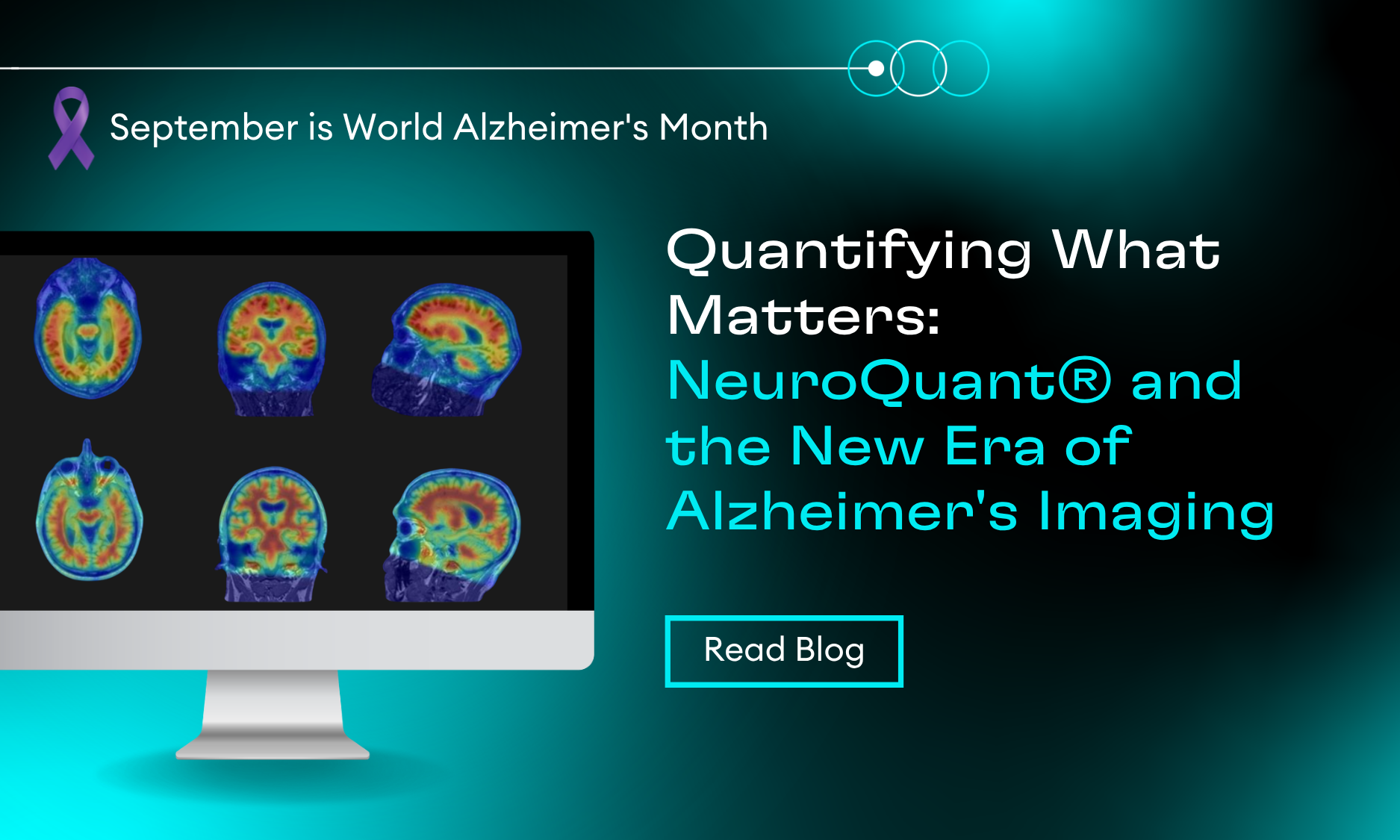
NeuroQuant PET is designed to bring automation, standardization, and quantitative reporting to brain PET analysis. The platform provides regional tracer quantification for amyloid, tau, and FDG PET studies, including SUVR values, regional Z-scores, and structured report outputs. For amyloid PET, NeuroQuant PET also supports Centiloid quantification, helping translate amyloid burden into a standardized scale that can support comparison across tracers, scanners, and timepoints.
This matters because visual interpretation remains essential, but quantitative tools can provide additional clarity. Standardized outputs can help reduce variability, improve communication, and support more consistent review across radiology, nuclear medicine, neurology, and memory care teams.
As imaging biomarkers become more central to Alzheimer’s disease evaluation and disease monitoring, solutions like NeuroQuant PET can help clinicians move from subjective assessment alone toward more objective, reproducible interpretation.
NeuroQuant PET is currently FDA 510(k)-pending and is not FDA-cleared.
Supporting Anti-Amyloid Therapy Monitoring with NeuroQuant Lesion Surveillance
The arrival of anti-amyloid therapies has created new opportunities for patients with early Alzheimer’s disease, but it has also introduced new imaging responsibilities. Patients being evaluated for or treated with these therapies require careful MRI review for findings associated with amyloid-related imaging abnormalities, commonly referred to as ARIA.
ARIA can include edema or effusion, known as ARIA-E, as well as hemosiderin-related findings such as microhemorrhages and superficial siderosis, known as ARIA-H. These findings may be asymptomatic, but they can also be clinically significant, making accurate baseline assessment and longitudinal monitoring essential.
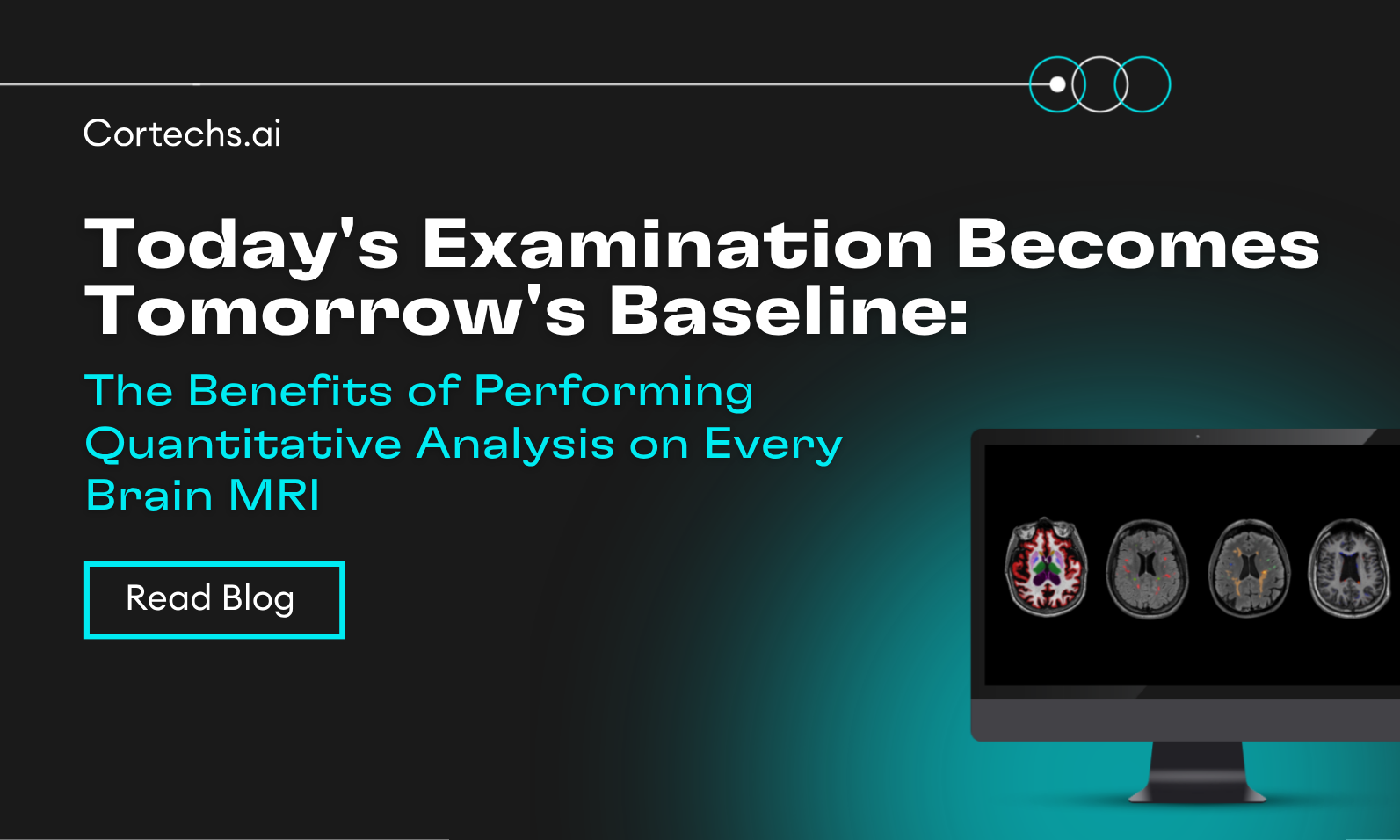
NeuroQuant Lesion Surveillance is designed to support physicians in this setting by providing automated quantification, visualization, and longitudinal tracking of FLAIR, T2*GRE, and SWI lesions. The solution helps clinicians evaluate baseline lesion burden and follow changes over time, including lesion counts, locations, maximum diameters, and comparisons with prior imaging.
For patients on anti-amyloid therapy, this type of structured imaging surveillance can help care teams monitor treatment-associated findings more consistently. It also supports clearer communication between radiologists, neurologists, infusion teams, and referring providers.
As anti-amyloid treatment pathways expand, imaging centers and health systems will need scalable tools that support not only diagnosis but ongoing patient management. NeuroQuant Lesion Surveillance helps meet that need by bringing objective, longitudinal lesion tracking into the clinical workflow.
Quantitative Imaging Across the Alzheimer’s Care Pathway
Alzheimer’s disease care is becoming more biomarker-driven, more multidisciplinary, and more longitudinal. That shift requires imaging tools that can support clinicians across the full continuum of care.
NeuroQuant helps quantify structural brain changes associated with neurodegeneration.
NeuroQuant PET supports standardized analysis of molecular imaging biomarkers, including amyloid, tau, and FDG PET.
NeuroQuant Lesion Surveillance supports longitudinal MRI monitoring for patients being evaluated for or treated with anti-amyloid therapy.
Together, these tools reflect a broader movement in dementia care: moving from isolated imaging exams toward integrated, quantitative, longitudinal insight.
This Alzheimer’s Awareness Month, Awareness to Improve Outcomes for Patients and Families
Alzheimer’s & Brain Awareness Month is an opportunity to educate, advocate, and support patients and families affected by Alzheimer’s disease and related dementias. It is also a reminder that clinical care is changing.
Earlier recognition, biomarker-informed evaluation, treatment eligibility assessment, and therapy monitoring all depend on high-quality imaging and consistent interpretation. Quantitative neuroimaging can help clinicians meet this moment by providing objective data that supports decision-making, communication, and longitudinal care.
At Cortechs.ai, we are committed to advancing AI-powered neuroimaging solutions that help clinicians bring greater clarity to complex neurological diseases. As Alzheimer’s care continues to evolve, our goal is to support the physicians, imaging centers, researchers, and care teams working to improve outcomes for patients and families.