Biomarkers for the clinical evaluation of cognitive impairment

Biomarkers for the clinical evaluation of the cognitively impaired elderly, amyloid is not enough

Recently published in the journal Imaging in Medicine (June, 2012), Linda K. McEvoy and James B. Brewer argue that while incorporating biomarkers for assessing Alzheimer’s disease risk, including volumetric MRI done with NeuroQuant®, can help in patient prognosis, tests for amyloid, if used in isolation, have potential for harm, as amyloid tests are clinically useful only when evidence suggests progressive cognitive decline or neurodegeneration. (Imaging in Medicine, June 2012, Vol. 4, No. 3 , Pages 343-357).

[button]Download[/button]

More Resources

10/14/2026

Cortechs.ai and CARPL.ai Partner to Expand Global Access to AI-Powered Imaging Solutions

Cortechs.ai joins CARPL.ai’s enterprise AI ecosystem to expand access to quantitative imaging solutions worldwide.

10/10/2026

World Mental Health Day: Why Brain Health and Mental Health Belong Together

Behind every brain scan is a person. Here’s why their voice matters.

09/30/2026

Today’s Examination Becomes Tomorrow’s Baseline: The Benefits of Performing Quantitative Analysis on Every Brain MRI

A single brain MRI shows where a patient is today. A quantitative baseline can help show how the brain changes over time.

09/18/2026

What a Head CT Can and Can’t Tell You About a Concussion

For Concussion Awareness Day, learn how quantitative CT analysis can help measure subtle structural changes and support follow-up after traumatic brain injury.

09/09/2026

Prostate Cancer Awareness Month: Finding the Cancer That Matters

How quantitative MRI can bring greater clarity to decisions across the prostate cancer journey.

09/01/2026

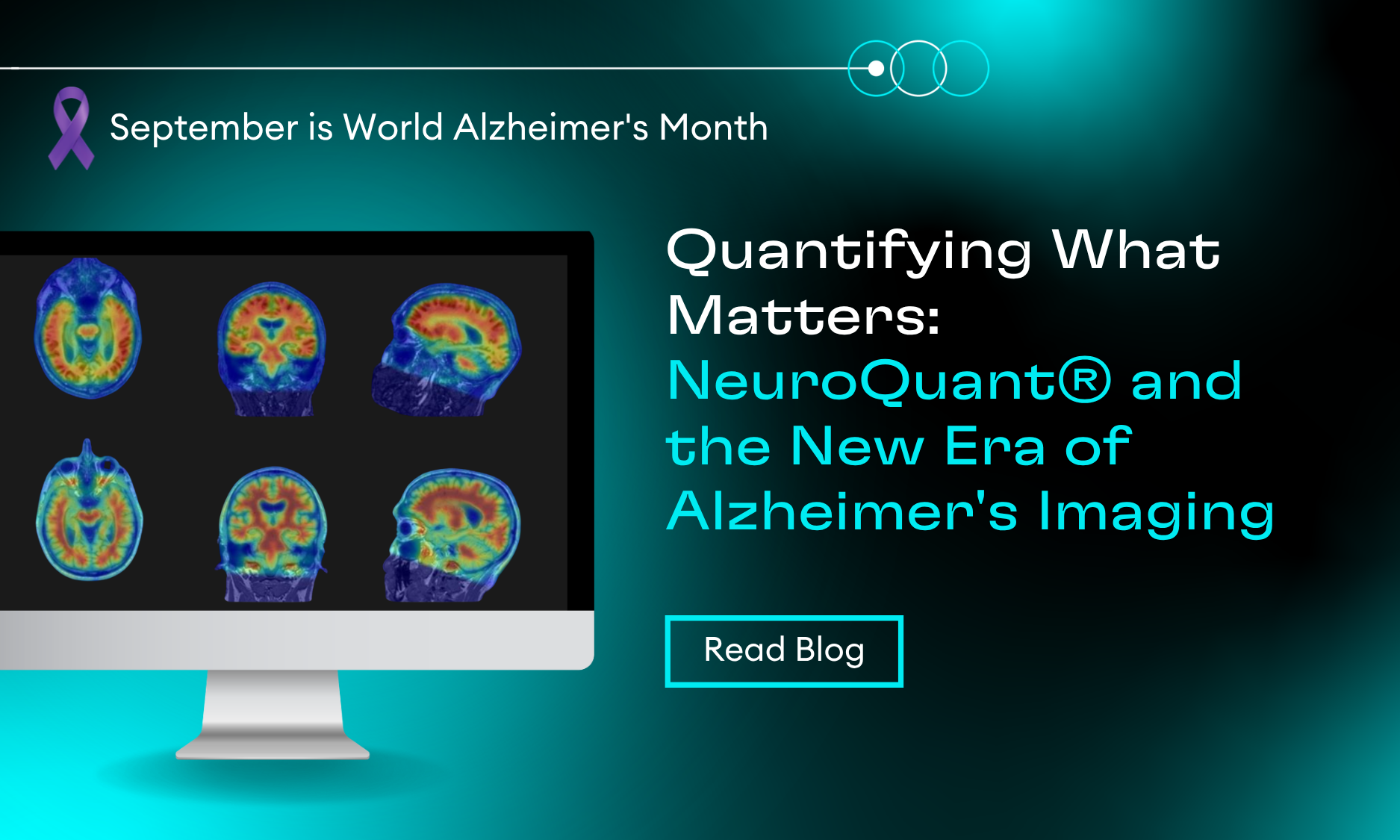
Quantifying What Matters: Advancing Alzheimer’s Imaging with NeuroQuant®

Explore how quantitative imaging is transforming Alzheimer’s care, from structural volumetrics and amyloid PET to treatment monitoring with NeuroQuant®.
Scroll to Top