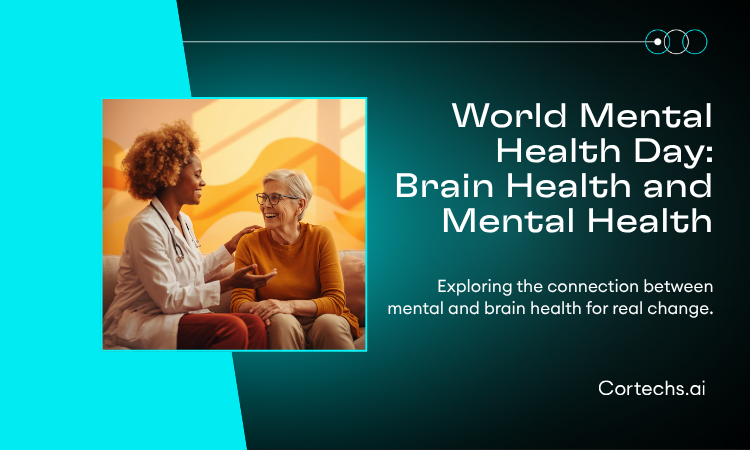
Today, October 10, is World Mental Health Day. This year’s theme from the World Federation for Mental Health, “Lived Experiences Heard: Real Voices, Real Change,” is a reminder that progress in mental health starts with listening to the people living it.
Neurological conditions affect more than the brain’s structure
For people living with multiple sclerosis, Alzheimer’s disease, epilepsy, or traumatic brain injury, a diagnosis rarely affects only physical health. Depression, anxiety, and changes in mood are common alongside these conditions, and family members and caregivers often carry an emotional weight of their own. Mental health is part of the full picture of neurological care.
Listening to lived experience
Patients are often the first to notice that something has changed: a memory that slips, a new kind of fatigue, a shift in how they feel day to day. Those experiences matter, and they deserve to be heard and taken seriously. When clinicians pair what patients tell them with clear, objective information, conversations about care can become more confident and more personal.
Where objective brain data fits in
At Cortechs.ai, our NeuroQuant® software measures brain structure volumes from routine MRI, compares them to a normative population, and tracks changes over time. For clinicians, that data adds an objective view of what is changing, and what is staying stable, for patients with neurodegenerative disease. For patients and families, a clearer understanding of the brain can make difficult conversations a little easier to have. Technology never replaces listening. But it can help make sure what patients share is supported by the clearest possible picture of their brain health.
Take a moment today
This World Mental Health Day, check in with a colleague, a patient, a friend, or yourself. Ask how they’re really doing, and listen to the answer. If you or someone you know is struggling, help is available. In the U.S., you can call or text 988 to reach the 988 Suicide & Crisis Lifeline. Outside the U.S., contact your local emergency or crisis services.