Advancing Quantitative PET Analysis in Dementia Imaging
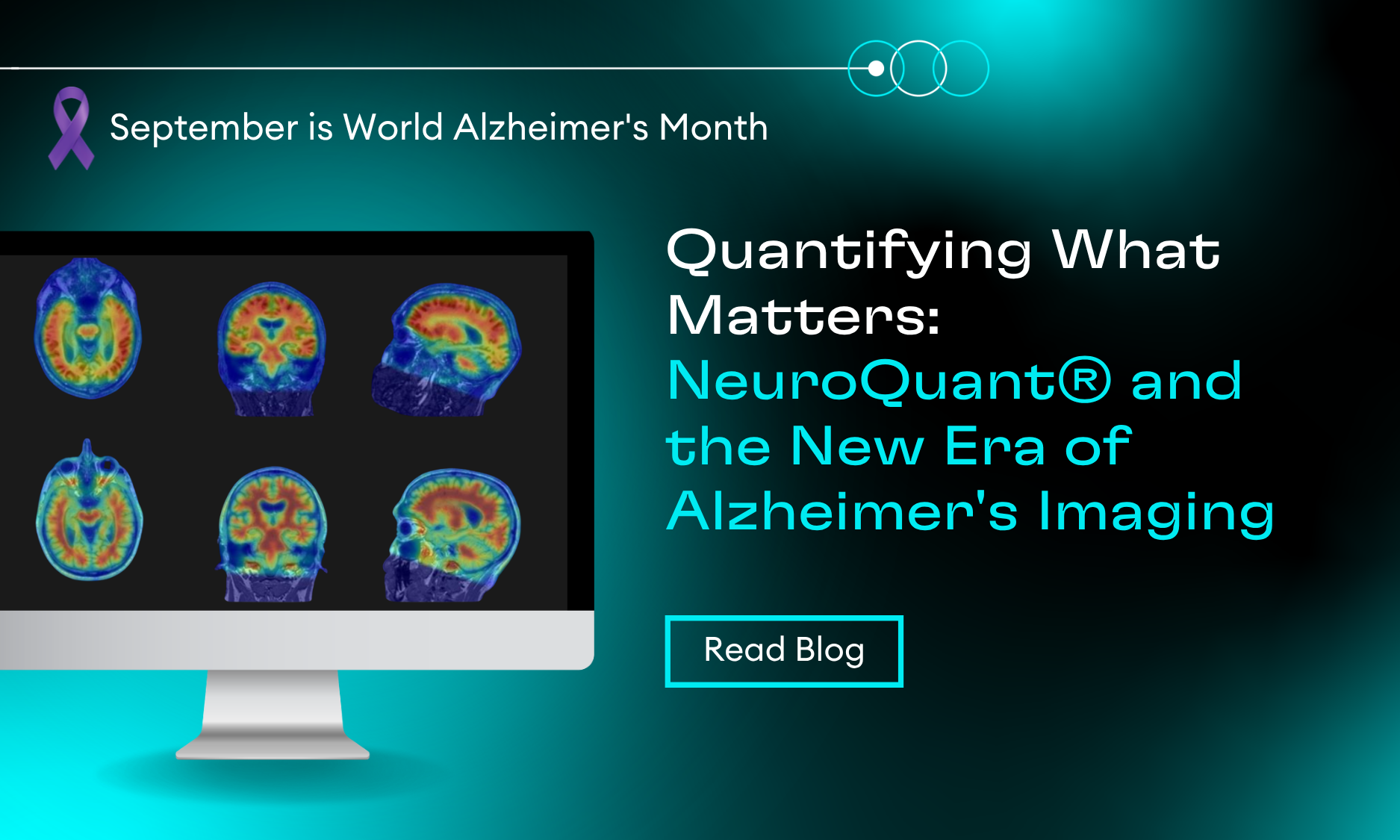
NeuroQuant® PET is FDA 510(k)-Pending for PET quantification and analysis in patients undergoing evaluation for dementia. As molecular imaging becomes increasingly central to the diagnosis and management of Alzheimer’s disease and related neurodegenerative disorders, the need for standardized, objective, and reproducible PET analysis has never been greater. NeuroQuant PET is designed to meet that need—bringing automated quantification, regional analysis, and structured reporting into routine clinical workflows.
Standardized Quantification Across Amyloid, Tau, and FDG
NeuroQuant PET provides fully automated, atlas-based quantification for amyloid, tau, and FDG PET tracers. The platform calculates standardized uptake value ratios (SUVRs), generates regional Z-scores, and produces structured reports that support radiologists and nuclear medicine physicians in delivering consistent, data-driven interpretations. By reducing subjectivity and inter-reader variability, NeuroQuant PET enhances confidence in molecular imaging assessment.
For amyloid imaging, NeuroQuant PET delivers tracer-specific regional analysis aligned with FDA label-defined regions of interest, including commonly used tracers such as florbetapir (Amyvid®), florbetaben (Neuraceq®), and flutemetamol (Vizamyl®). A key feature is Centiloid scoring, a standardized scale anchored to 0 (cognitively normal controls) and 100 (typical mild Alzheimer’s disease), enabling consistent interpretation and comparison across tracers and imaging platforms. In addition to SUVR values, regional Z-scores are outputted, supporting clear and objective assessment of amyloid burden.
For tau imaging, NeuroQuant PET provides regional quantification aligned with Braak staging patterns, using appropriate reference normalization and Z-score reporting. This supports evaluation of tau deposition in Alzheimer’s disease and offers structured quantitative insight beyond visual reads alone.
For FDG PET, the platform analyzes nine dementia-relevant regions of interest using a brainstem reference region to generate SUVRs and Z-scores. This quantitative framework assists in identifying patterns of hypometabolism and supporting differential diagnosis across dementia subtypes.
Seamless Integration Into Clinical Workflow
NeuroQuant PET is compatible with PET-CT, PET-MR, and PET-only workflows. When processed with MR, the system leverages NeuroQuant ® atlas-based registration and segmentation to provide PET-MR fusion images and enhanced regional analysis. When MR is included, NeuroQuant PET also provides a volumetric table, integrating structural brain metrics with molecular PET findings for a more comprehensive evaluation of neurodegeneration.
Designed for seamless adoption, NeuroQuant PET features fully automated processing and PACS-compatible outputs. PET-MR or PET-CT fusion series, anatomical overlays, and tracer-specific quantitative reports are returned directly into the reading workflow enabling radiology and nuclear medicine teams to incorporate quantitative metrics without disrupting established processes.
Supporting the Future of Dementia Care
As disease-modifying therapies and biomarker-driven treatment pathways continue to evolve in dementia care, standardized quantitative imaging tools are becoming essential. NeuroQuant PET aims to support clinicians with objective, reproducible PET metrics helping guide clinical decision-making and disease monitoring.
NeuroQuant® PET is currently FDA 510(k)-Pending for PET quantification and analysis in dementia imaging. We look forward to expanding access to standardized, automated PET quantification that supports precision medicine in Alzheimer’s disease and related dementias.