Lesion detection, progression, and analysis for patients with multiple sclerosis
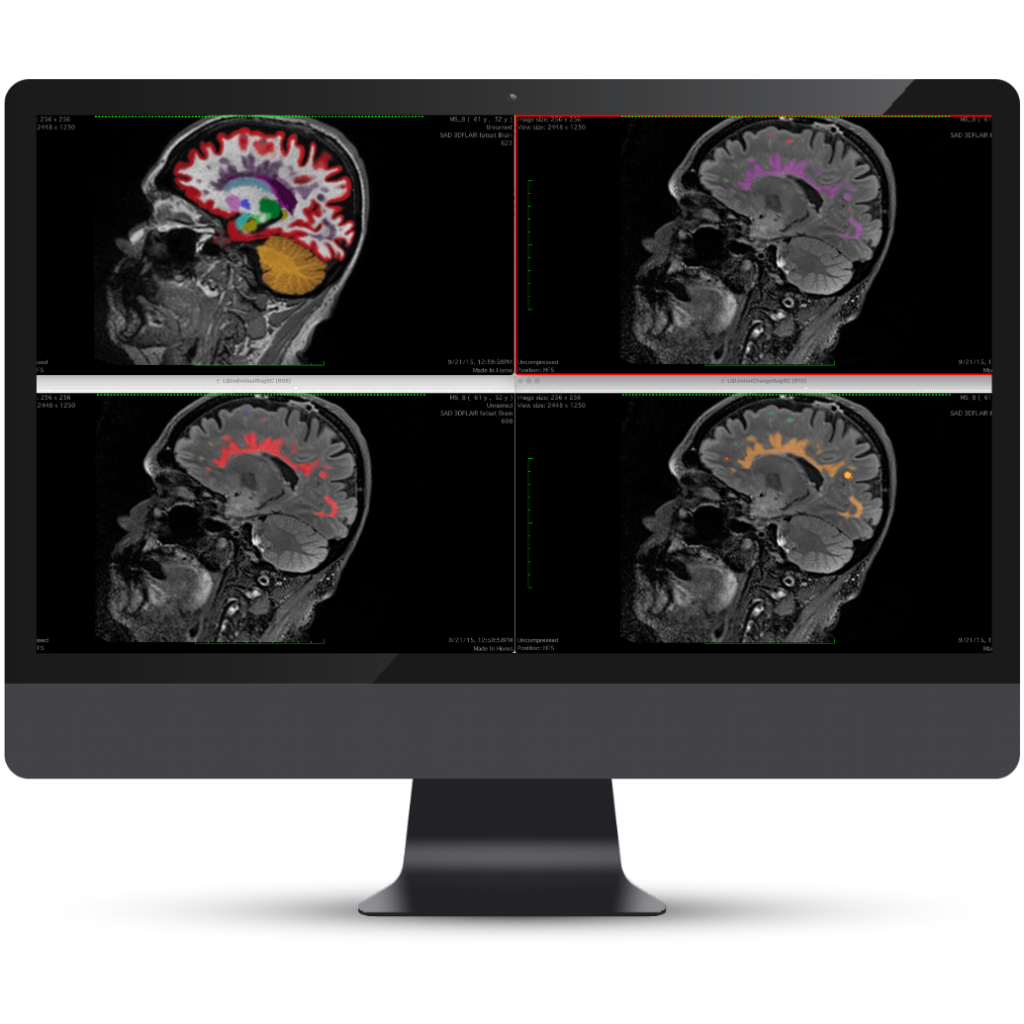
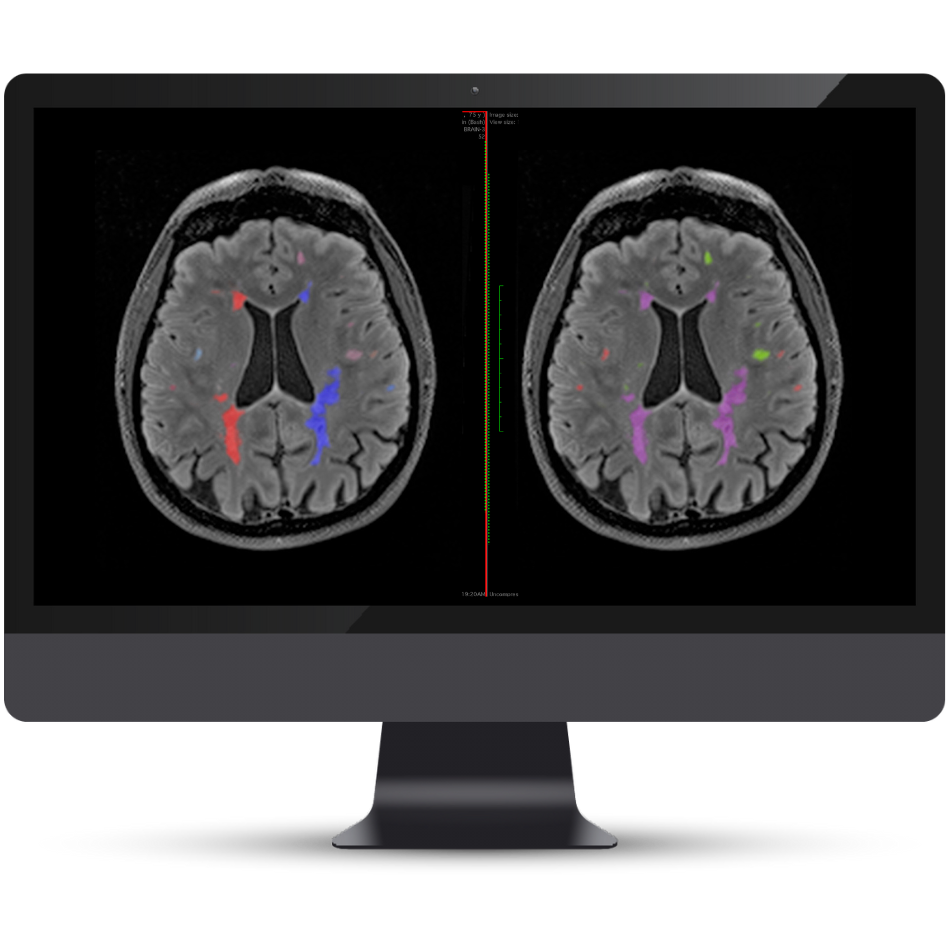
Enhance radiology workflows and output identifying, quantifying, and tracking multiple sclerosis lesions. NeuroQuant MS automatically labels and provides change visualization of new, stable, shrinking, enlarging, and other lesion dynamics.
Identify and track evolution of MS lesions over time
Supports clinical impression with objective, volumetric data and color-coded brain structure images that aid diagnosis, treatment and lifestyle planning. Identify lesion dissemination, analyze patterns of distribution, highlight areas of highest burden and track lesions across orthogonal views.
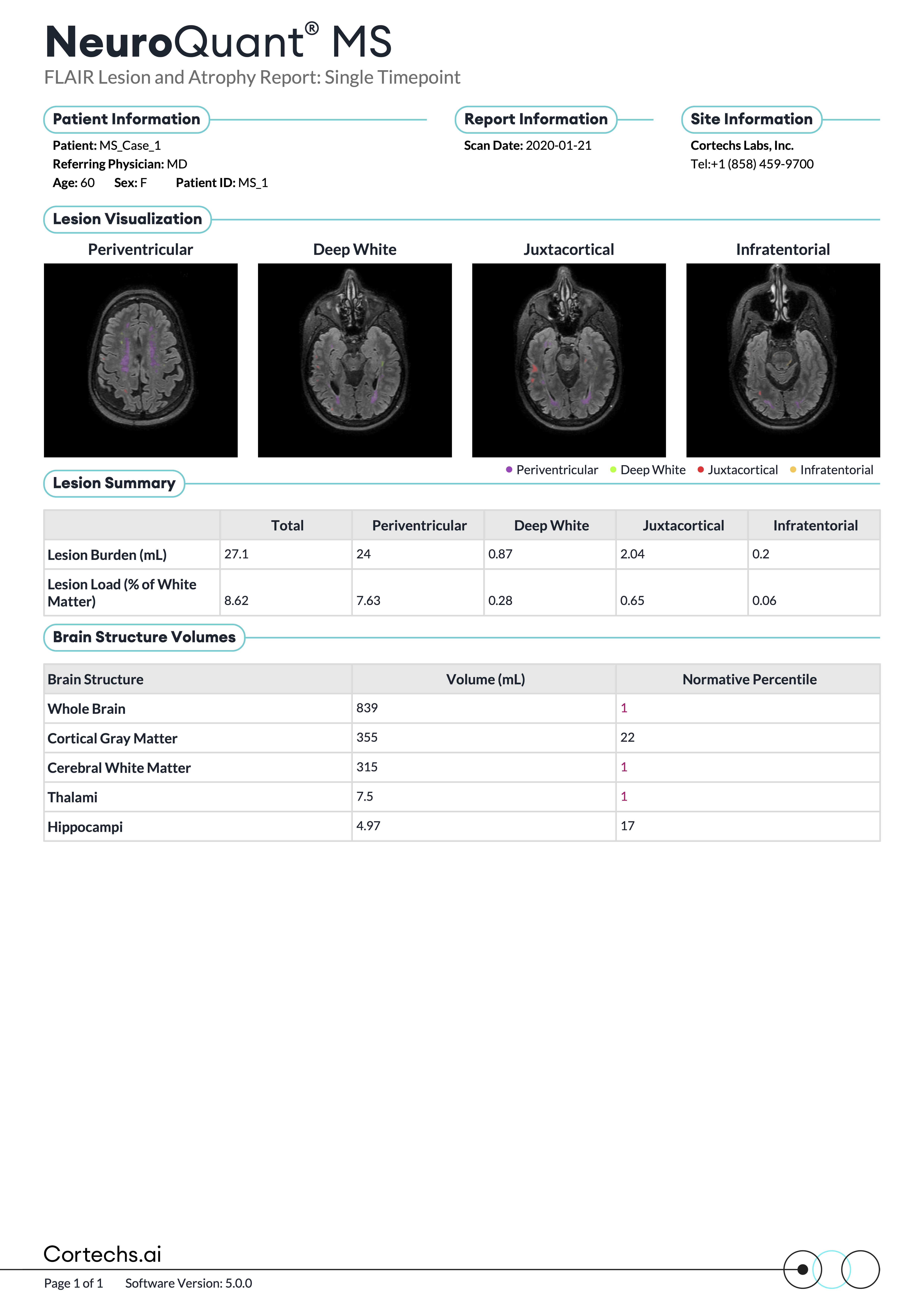
NeuroQuant MS Report is for the clinical assessment of multiple sclerosis. Allows physicians to analyze and track important lesion metrics such as burden and count to support patient treatment plans.
Quantifies lesion burden (volume, count, and load) in periventricular, juxtacortical, infratentorial, and deep white matter regions.
Measures whole brain, white matter, and thalamic volumes to track neurodegeneration.
Provides lesion-to-white-matter ratios for standardized assessment.
Useful for evaluating disease activity and treatment response in multiple sclerosis.
FLAIR Lesion and Atrophy Report PLUS
NeuroQuant MS PLUS
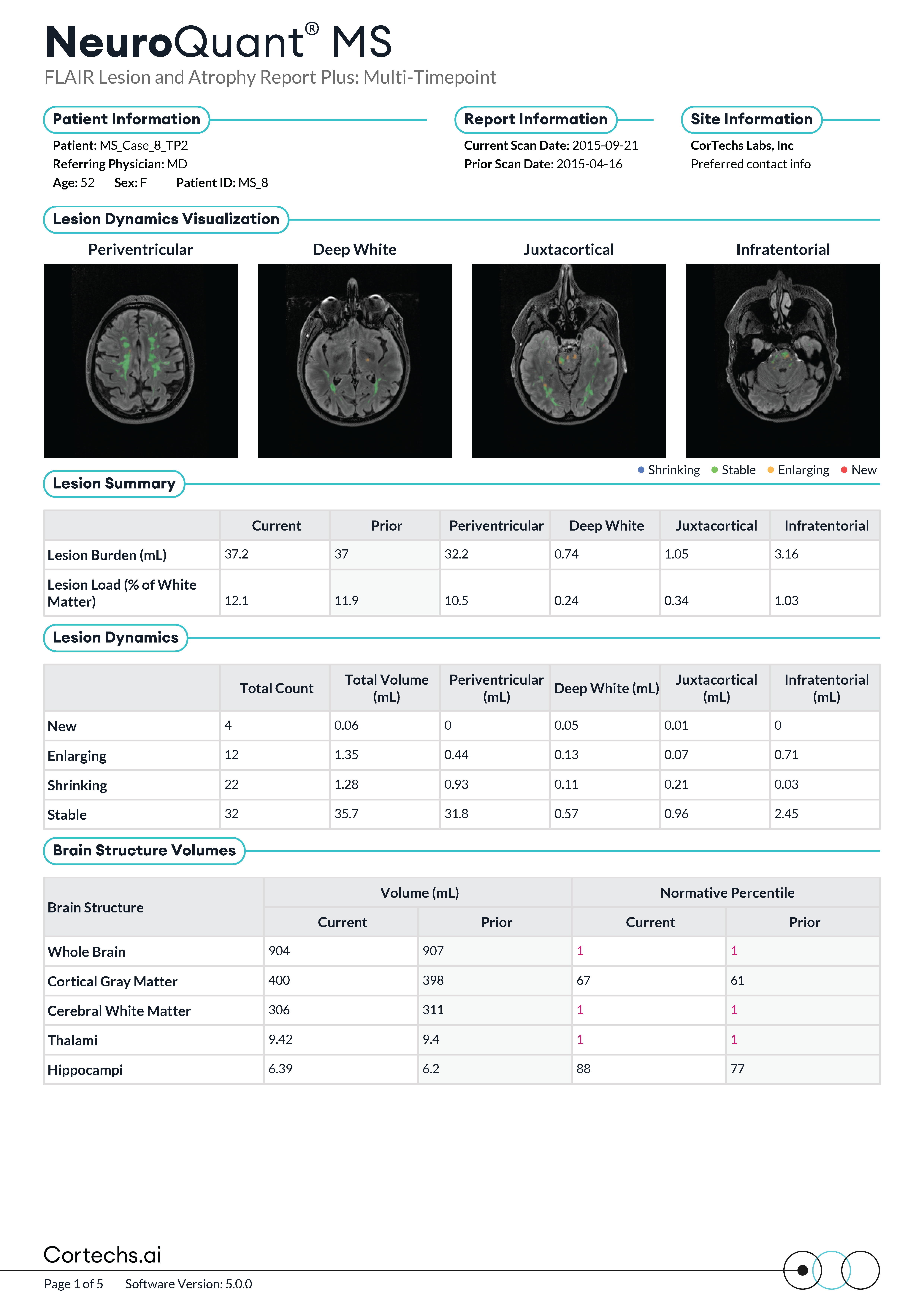
The NeuroQuant MS PLUS Report is a comprehensive 5-page report for the clinical assessment of multiple sclerosis. Allows physicians to analyze and track important lesion metrics such as burden and count to support patient treatment plans.
Adds longitudinal lesion dynamics: new, enlarging, shrinking, and stable lesions across timepoints.
Displays lesion distribution by hemisphere and brain region for precise localization.
Includes graphs tracking lesion history and brain structure atrophy trends.
Enhances clinical decision-making by distinguishing active inflammation from stable disease.
Microvascular Ischemic Disease
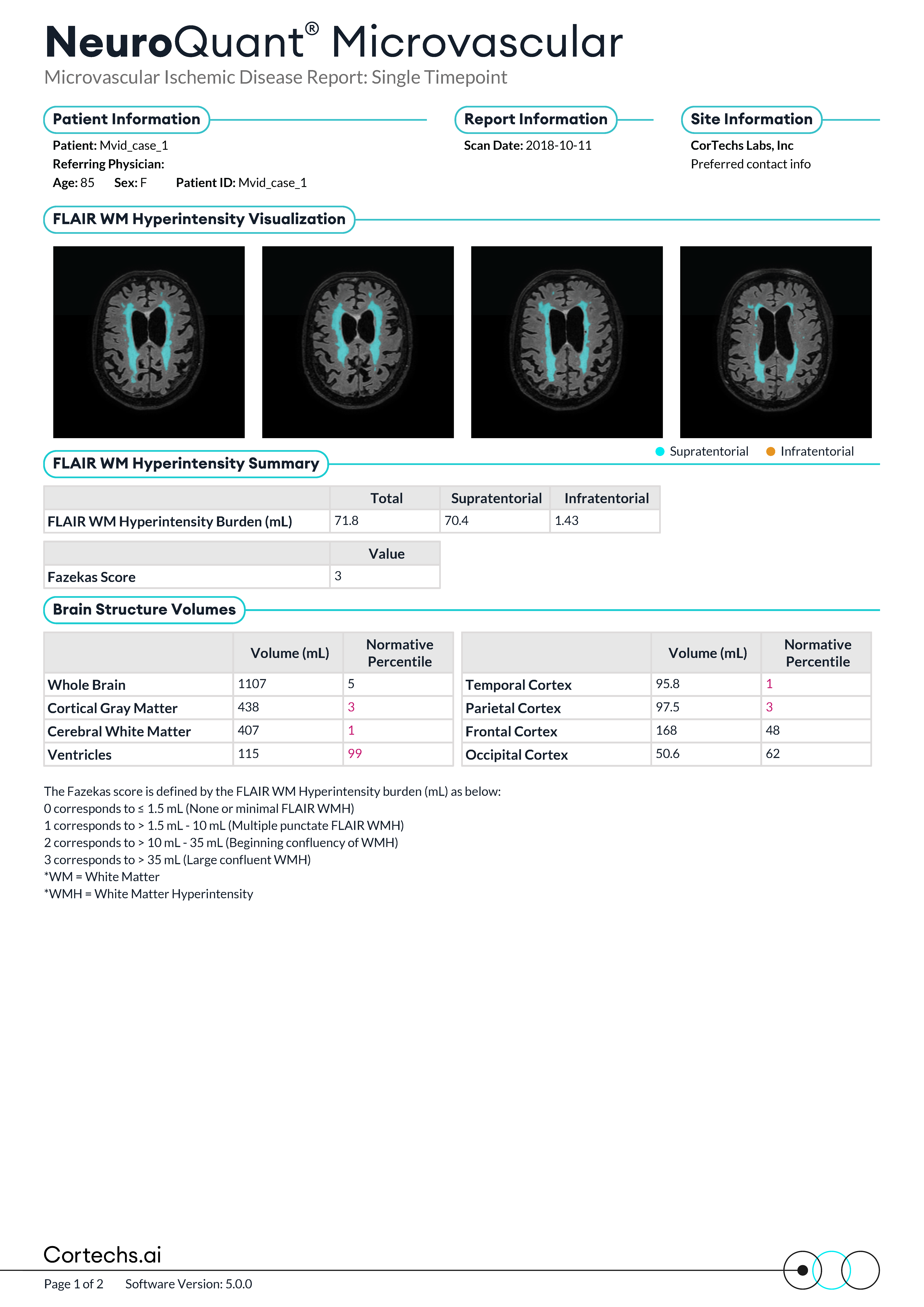
Microvascular Report
NeuroQuant Microvascular report segments and quantifies total hyperintensity volume burden and automates a Fazekas score.
Quantifies white matter hyperintensities (WMH) by location and total burden using FLAIR.
Provides automated Fazekas scoring (0–3) for standardized severity grading.
Includes volumetric analysis of cortical gray matter, white matter, and ventricles.
Useful for assessing vascular contributions to cognitive decline or vascular dementia.
Benefits
Color-coded lesion segmentation
Identify confluent lesions and new lesion load
Track progression over time
Longitudinal reporting monitors structure volumes and visual changes from previous scans – all within a single report.
Change visualization
Color-coded overlay demonstrates lesion dynamics
Normative reference data
Compare the patient’s brain structure volume measurements to a normal population.
Accuracy across all ages
Analyse ages 3-100 using our Dynamic Atlas™ technology, validated over thousands of clinical cases.
Understanding CPT Codes 0865T & 0866T
As of January 1, 2024, new Category III CPT codes (0865T, 0866T) are active for AI-assisted quantitative brain MRI analysis. These codes apply to a variety of vendor solutions, including Cortechs.ai, and serve as an essential step toward achieving permanent reimbursement.