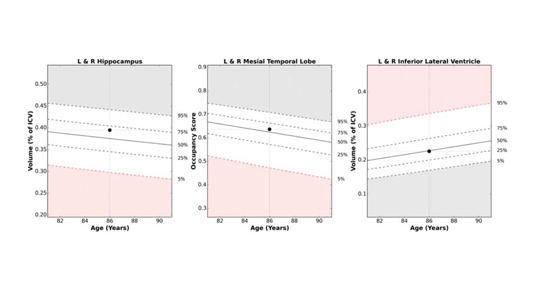
When evaluating a subject’s brain structure volumes, looking at absolute volumes is the first step. However, naturally occurring variances due to age or gender might distort the impression these values provide. Differences in overall head size might distort the impression further, and result in questions such as: Is this hippocampus exceptionally small or is my patient’s overall brain size small and the smaller hippocampus is expected for somebody their age?
Normalizing the brain structure to the intracranial volume (ICV) adjusts for differences in overall head size; further restrictions of comparison to male and female subjects of a defined age provides even better results.
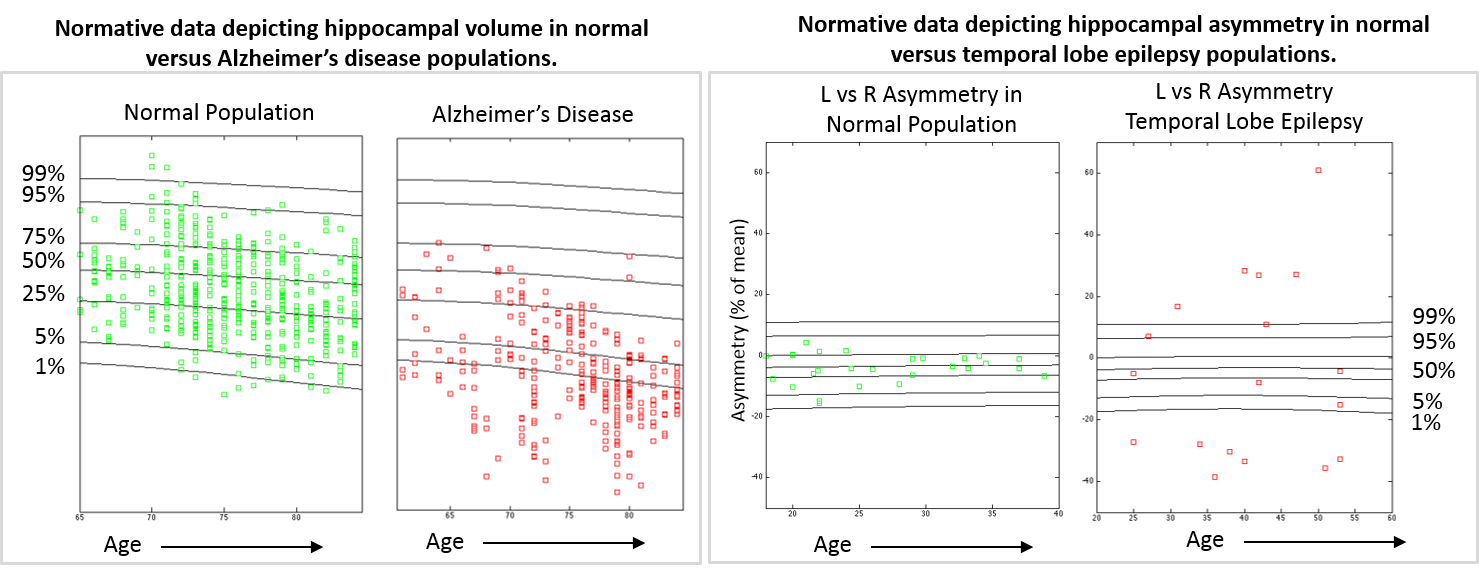
Using a normative data set established out of large population data gives context to the personalized brain structure volumes over a very broad age range. The WHO and CDC have been using normative reference charts for growth evaluations in children for many years. The same approach is used in the visualization of NeuroQuant®, results displaying an individual’s brain structure volume measurements relative to a healthy population. This allows NeuroQuant to deliver a precise impression of where that individual’s brain structure volume lies within an age- and gender- based reference chart, which aids physicians in their assessment of neurodegenerative conditions.
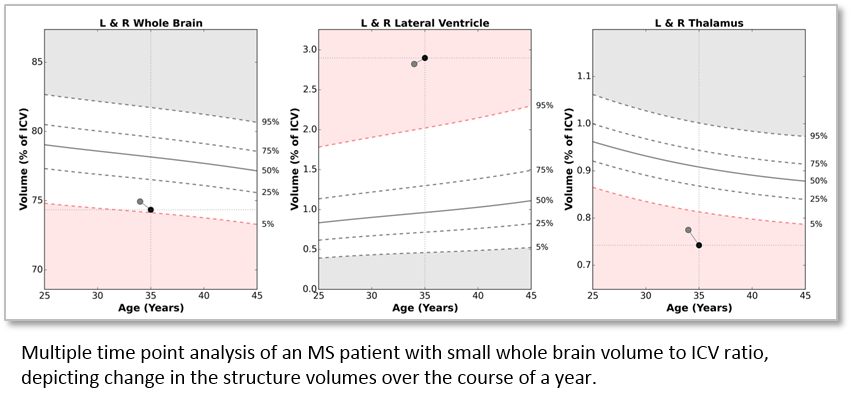
Displaying the normalized patient brain structure volumes with reference to healthy cohorts based on age and gender is an integral part of NeuroQuant and a feature of each NeuroQuant report. Since launch in 2007, the NeuroQuant normative database has been continuously tested and validated against tens of thousands of clinical cases.
Want to learn more about Cortechs.ai Normative Database? Cortechs.ai has developed a Normative Database white paper, which is now available for download.