Concussion, opening in theaters nationwide on December 25, 2015, is based on the story of Dr. Bennet Omalu, a forensic neuropathologist, who discovered and publicized chronic traumatic encephalopathy (CTE) based on his 2002 autopsy findings of a former NFL Pittsburg Steelers center, Mike Webster, and Dr. Omalu’s fight against the National Football League (NFL), who denied there was a problem and sought to damage his reputation and research.
The release of Concussion could stir the pot on this already highly controversial topic. The NFL is reported to be drafting its response to the movie, and based on the trailers, it appears that Concussion is not afraid to critique the NFL and how they have handled repeated brain trauma in players.
To provide some background, CTE is a progressive degenerative brain disease typically seen in professional athletes who have a history of repetitive brain trauma (concussions and subconcussions) as well as military personnel who have experienced sudden and violent head movement, for example, from a blast wave. CTE can cause mood, behavioral changes, and a decline in cognitive abilities such as decision making and planning and may result in memory impairment, which in turn could lead to depression and suicidal thoughts, apathy, impulsive behavior, and eventually dementia, speech and gait abnormalities and parkinsonism. Advanced CTE may be clinically mistaken for Alzheimer’s disease or frontotemporal dementia.
In the past few years, several high profile suicides of former athletes, most notably NFL and NHL players, have brought increased attention to the impact of concussions and brain trauma which might result in this brain disease. Currently, there is no treatment for CTE and is only diagnosed post-mortem. The known neuropathological symptoms of CTE are similar to Alzheimer’s Disease, including atrophy of the cerebral cortex and medial temporal lobe, enlarged ventricles, and extensive tau protein tangles. However, there is an absence of β-amyloid deposits. Research efforts are focused on the creation of clinical diagnostic criteria, finding objective biomarkers, and understanding the additional risk factors and underlying mechanism that causes the disease.
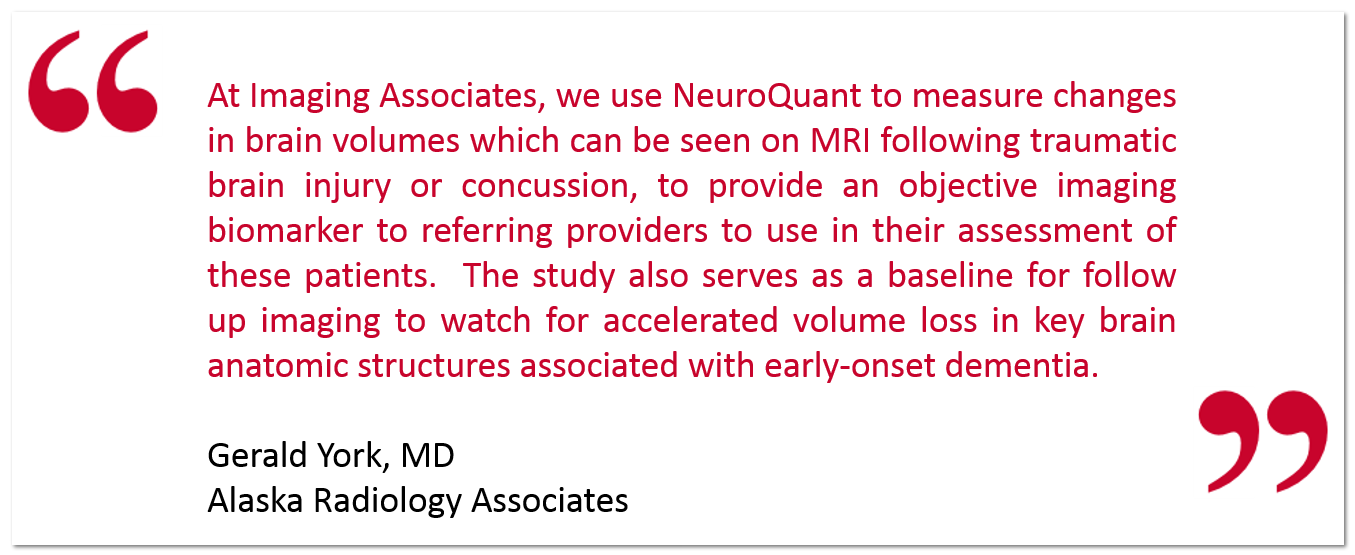
For neurologists and researchers studying neurodegeneration and CTE, Cortechs.ai offers five distinctive volumetric reports which can be used in the evaluation of brain trauma and neurodegenerative conditions. NeuroQuant is a break- through medical software that segments and measures brain structure volumes based on MRI images and compares the brain volumes to a normative database. All NeuroQuant reports are available for ages 3 to 100 and provide physicians and researchers volume measurements of up to 39 subcortical structures. NeuroQuant is an accurate and proven software tool that provides quantitative measurements to aid in clinical assessments of brain anatomy after injury.
How will the general public receive Concussion? That remains to be seen – it is hard to gauge how influential a movie will be based on trailers. However, it has the potential to cause a far reaching impact in our society – to encourage the enhancement of the health and safety of our soldiers in the field and our athletes at all levels.
- Baugh, Christine M., Stamm, Julie M. et al. (2012). Chronic traumatic encephalopathy: neurodegeneration following repetitive concussive and subconcussive brain trauma. Brain Imagaing and Behavior; 6 (2): 244-254.
- Goldstein, Lee E., et al. (2012). Chronic Traumatic Encephalopathy in Blast-Exposed Military Veterans and a Blast Neurotrauma Mouse Model. Sci Transl Med; 4, 134ra60.
- McKee, Ann C., Cantu, Robert C. et al. (2009). Chronic Traumatic Encephalopathy in Athletes: Progressive Tauopathy following Repetitive Head Injury. J Neuropathol Exp Neurol.; 68(7): 709–735.
- Mckee, Ann C., Stein, Thor C. et al. (2012). The spectrum of disease in chronic traumatic encephalopathy. Brain: 1 – 22.
- Kirk, Michael. (2013). League of Denial: The NFL’s Concussion Crisis. PBS FrontLine Interview of Dr. Bennet Omalu. http://www.pbs.org/wgbh/pages/frontline/sports/league-of-denial/the-frontline-interview-dr-bennet-omalu/