Epilepsy is one of the most common neurological disorders worldwide, affecting millions of people with unpredictable, life-altering seizures. While advancements in diagnosis and treatment have improved patient outcomes, challenges remain, particularly in assessing the structural brain changes that contribute to seizure activity.
One of the most critical structures involved in epilepsy, especially temporal lobe epilepsy (TLE), is the hippocampus. Structural abnormalities in this region are strongly associated with seizure onset, making precise imaging essential for diagnosis and treatment planning. This is where NeuroQuant Seizure changes the game.
Hippocampal Asymmetry Report: A Key Tool in Epilepsy
NeuroQuant Seizure is an advanced imaging tool that quantifies hippocampal volume and asymmetry, providing objective, data-driven insights for radiologists and neurologists. By detecting hippocampal atrophy or structural damage, this tool supports clinicians to make more accurate diagnoses and treatment decisions.
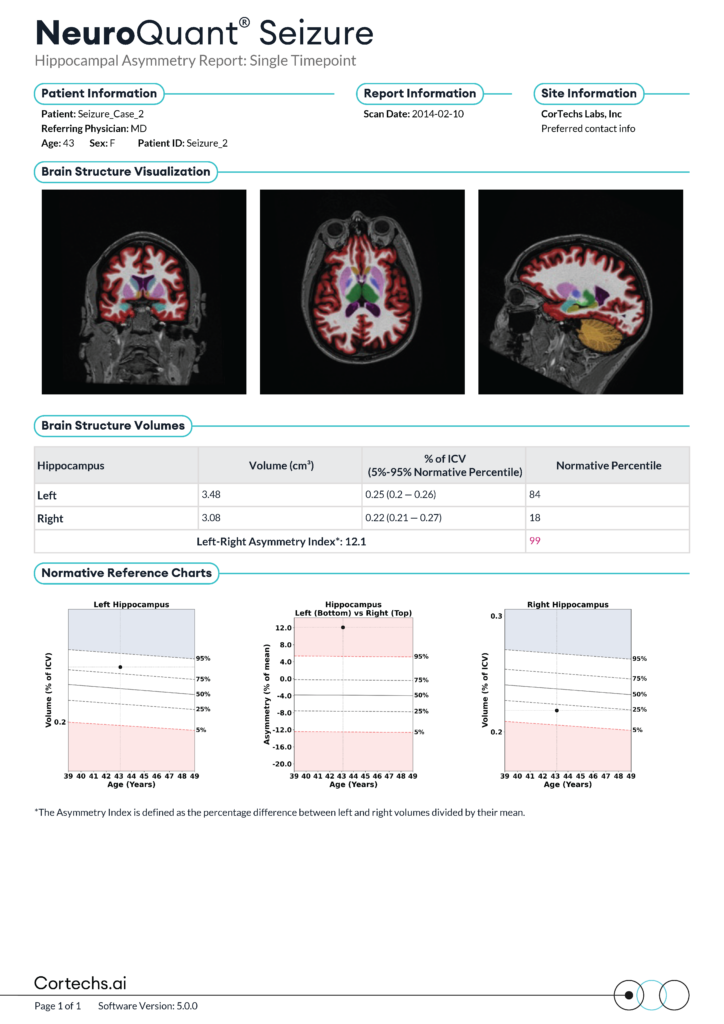
Here’s how it works:
- Hippocampal Asymmetry Measurement: The tool quantifies the size difference between the left and right hippocampi, which can often be a sign of brain structural changes due to epilepsy.
- Automated and Accurate: NeuroQuant Seizure uses advanced image processing algorithms to provide an objective, automated analysis of the MRI scans, improving efficiency and consistency in assessments.
- Improved Decision-Making: By delivering accurate and consistent data, the hippocampal asymmetry report aids clinicians in making informed decisions regarding diagnosis, treatment options, and surgical considerations when necessary.
Why It Matters for Epilepsy Patients
The ability to detect hippocampal abnormalities early on is a game changer for epilepsy management. By leveraging NeuroQuant Seizure’s hippocampal asymmetry analysis, healthcare providers can:
- Enhance Diagnosis: Quickly identify structural changes in the brain that could be contributing to seizures, helping to pinpoint the type of epilepsy and its possible causes.
- Tailor Treatment Plans: With a more accurate understanding of the brain’s structure, treatment plans can be customized to each patient’s specific needs, whether through medication or surgical options like hippocampal resection.
- Monitor Disease Progression: NeuroQuant Seizure also allows for longitudinal tracking, offering insights into how hippocampal changes evolve over time, helping clinicians assess the effectiveness of treatment interventions.
As neuroimaging technology advances, tools like NeuroQuant Seizure are transforming epilepsy care by delivering objective, high-precision MRI analysis. By integrating AI-driven insights into clinical workflows, healthcare providers can make more informed decisions, leading to better outcomes for epilepsy patients. With NeuroQuant Seizure, the future of epilepsy diagnosis and treatment is faster, accurate and more precise, empowering clinicians to provide personalized, data-driven care that makes a lasting impact.